I CAN'T AFFORD MY RENT

<div class="user-question">My rent is about to increase and I’m trying to figure out what to do. How do I actually successfully negotiate rent?? The increased rent would be a huge strain for me.</div>
I feel you. I’ve been there. Maybe you finally got a small raise, maybe you’ve just gotten your finances back on track, and suddenly another cost increase lands on your plate.
Most people approach rent negotiations like they’re asking for a favor. That almost never works. A better mindset is this: this is a business conversation, and you probably have more leverage than you think.
Before you even talk to your landlord, understand the game you’re playing.
First, check the rules.
Is your apartment rent-stabilized or rent-controlled? In many cities, annual increases are legally capped (often around 3–5%). If the proposed increase is above what’s allowed, you’re not negotiating, you’re enforcing your rights. Always check local regulations first.
Next, take an honest view at your “tenant profile.”
Have you lived there for a while? Do you pay on time? Do you take good care of the apartment? Have you avoided complaints or issues?
Landlords care deeply about good tenants. Turnover costs them real money - cleaning, repairs, broker fees, and weeks (or months) of lost rent. A reliable tenant is often worth more than a higher rent.
Finally, do a quick market check.
Look at what similar apartments nearby are renting for. If the new rent would put your place above market, that’s meaningful leverage
How to have the conversation
1️⃣ Lead with alignment, not confrontation
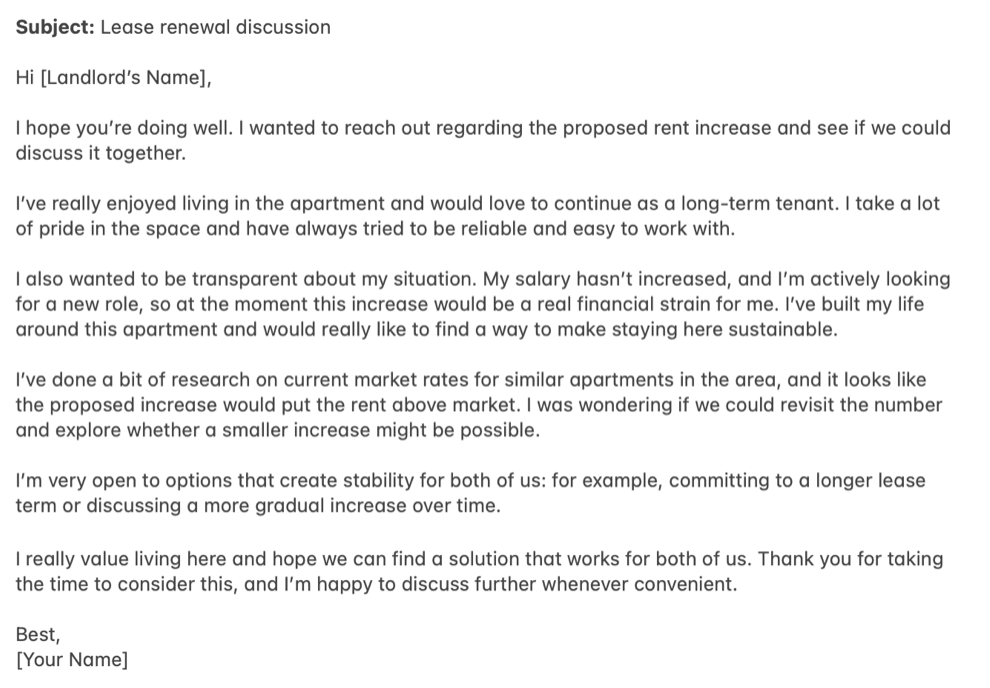
Start by making it clear that you want to stay and that your interests overlap. You want affordable housing; your landlord wants stability, predictable income, and low turnover.
You can say: “I really enjoy living here and would love to continue as a reliable, long-term tenant.”
This immediately lowers defenses. You’re not pushing back or picking a fight, you are signaling that you want to solve the problem together and are open to a longer-term commitment.
2️⃣ Explain your situation, honestly and human
This is where it helps to sound like a real person, not a negotiation script. Instead of saying “I can’t afford this,” explain what’s actually going on:

3️⃣ Bring objective benchmarks
Your landlord may feel it’s time for an increase and if you simply say no, that’s just your opinion versus theirs. Market data turns the conversation into something objective.
Look at comparable rents, vacancy rates, and any concessions nearby buildings are offering.
Then you can say: “Based on current market rates for similar apartments, this increase would put the rent above market. Would you be open to revisiting the number together?”
4️⃣ Offer solutions, not just resistance
Don’t stop at “this doesn’t work.” Give them options. For example:
- A smaller increase (e.g. $75–$100 instead of $200)
- A longer lease in exchange for a lower rent
- A gradual increase over a few months instead of all at once
5️⃣ Quietly know your backup plan
You don’t need to threaten to move, but you do need to know what you’ll do if the answer is no. Whether that means exploring other apartments, asking for a short extension while you search, or planning a move at lease end, having a plan B changes how confidently you show up. And that confidence often makes a real difference in how flexible the other side becomes.
Most landlords prefer keeping a good tenant over rolling the dice on a new one. If you make staying the easiest and most rational choice, you dramatically increase your odds.
Example email to your landlord
Found this valuable? Here are some more deep dives from the Frich team 🤝
✅ Is renting a waste of money? [PT 1/2]
✅ Is renting a waste of money? [PT 2/2]
Best of luck!
Feli Oikonomopoulou
Founder & CEO, WealthMeUp
