Rachel Wiseman: The Beauty Framework That Makes You Think Before You Buy
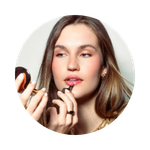
Most people standing at a Sephora counter are thinking about the shade, the formula, the packaging. Rachel is thinking about the price per ounce.
She built a framework called Beauty Math, a system for running the numbers on any beauty purchase before committing, and has been using it to cut through the noise of an industry that drops new products constantly and profits from impulse. The math doesn't always tell you not to buy. But it tells you exactly where something lands, and whether the premium is actually earned.
We sat down with Rachel to talk about how Beauty Math works in practice, where even financially intentional people are still quietly overspending, and the category she always assumed she'd splurge on, until the numbers changed her mind.

⬇️Read the full interview below ⬇️
What do you actually do, and how would you describe what you actually do day-to-day?
I help people shop smarter, not harder. I started in beauty because it's what I know and love, but the framework applies everywhere — skincare, haircare, home, you name it. The core idea is simple: before you buy anything, you should have a way to think about it. I give you that framework.
When you are deciding whether something is "worth it" or not, what is the first filter you use?
Before anything else, I run it through Beauty Math. That means looking at the price per ml, per gram, or per ounce — whatever the unit is. From there, I ask: is this priced at a premium or a discount to the average? And more importantly, does it deserve to be?
A discount isn't always a deal. A premium isn't always worth it. The math tells you where something lands — then the formula and experience tell you if it belongs there.
What's the core idea behind Beauty Math, and what's one example that changed how you spend?
Beauty is noisy. New products drop constantly, trends move fast, and there's no real way to cut through it all — until you have a framework. Beauty Math gives you that anchor. It's not the whole answer, but it gives you grounding when everything else is trying to distract you.
The category that changed everything for me? Lip liners. When I broke down the price per ounce, it's genuinely shocking — close enough to gold that the comparison actually holds. That's not something you'd ever think about standing at the Sephora counter. Now I think twice every single time.
For reference: correct math puts quality lip liner around $250/oz. The Merit calculation that initially surfaced ~$2,500/oz was due to a website sizing error, which I actually caught by contacting the Merit team directly. Even at the corrected number, the price per ounce is eye-opening. Gold spot price sits around $5,100/oz.
Where are financially intentional people still quietly overspending?
Overconsumption. And I say this as someone who, by nature of what I do, has a lot of product — so this is very much pot calling the kettle black.
But here's the thing people miss: even if the price per ounce looks good, the real best value is what you actually use up. A full-size product that sits in your drawer isn't a better deal than the mini you finished. More product isn't a win if it never gets used.
Social media makes it so easy to always want the newest thing. Beauty Math exists partly to slow that down — to give you a beat before you buy.
On the flip side, where does spending more upfront actually save money over time?
Two places immediately come to mind: laser hair removal and skincare.
Laser felt like a big spend at first — roughly $1,000 total. But when you add up waxing at around $80 per session, you make back the cost of laser within about a year. On a long enough timeline, it's not even close.
Skincare is the other one. If a product has a high concentration of actives or genuinely quality ingredients, I'll invest. Because the alternative is buying five mediocre products, not getting results, and spending more anyway. Sometimes the higher price is the disciplined move.
Do you ever feel pressure to justify your spending?
Honestly, it's something I'm constantly working against. We've gotten so used to people oversharing and over-explaining every purchase — and I don't think you owe anyone that.
If something makes you happy, sometimes that's enough. People splurge on different things for different reasons: shoes, bags, travel, makeup. None of it needs a justification. What matters is that you're not depriving yourself to the point where life feels joyless. There's a healthy dose of indulgence in a well-lived life. It's really just about balance.
What's a spending tradeoff that surprised you?
Blush, honestly. I'm a blush girl — I always assumed I'd be willing to splurge there. But when I mapped out the category, there are so many high-quality options at totally reasonable price points that the ones priced way above the median just… don't hold up.
For context: cream blush averages around $140/oz, powder blush around $6.44/g. When there are a hundred good options clustered around a fair price, it becomes really hard to justify going significantly above it. The more options that exist at a reasonable price point, the harder it is to defend the premium. That was a real shift for me.
Your ins and outs for 2026?
In: Health and wellness, full stop. Gym, workout classes, fresh organic produce — yes, it's expensive to eat well, but it's non-negotiable for me. Good sleep too: quality sheets, a good pillow, whatever it takes. That stuff isn't a splurge. It's the foundation. When you feel good, you operate better, you show up better, and everything else follows.
Out: Clothing. I recently moved to New York and when I finally started going through everything, I realized I have so much — way more than I actually reach for. I've moved three times in the last six months, lived out of suitcases, had stuff in storage. I genuinely hadn't seen most of what I owned in months.
My goal for the rest of 2026 is a serious closet edit, nothing new coming in, and actually discovering my style by working with what I have. Maybe I'll bring a few things in next year. But right now? I don't need a single new piece of clothing.
Follow Rachel ✨
Rachel's Beauty Math breakdowns are available through her Linktree. If any of the numbers in this piece made you look twice at your routine, that's where to start.
Check out our Instagram post with Rachel here.
Follow Rachel:
Instagram: @rawmakeup__
Linktree: RAW MAKEUP
TikTok: @rawmakeup
